This Is the Way the World Ends by Jeff Nesbit
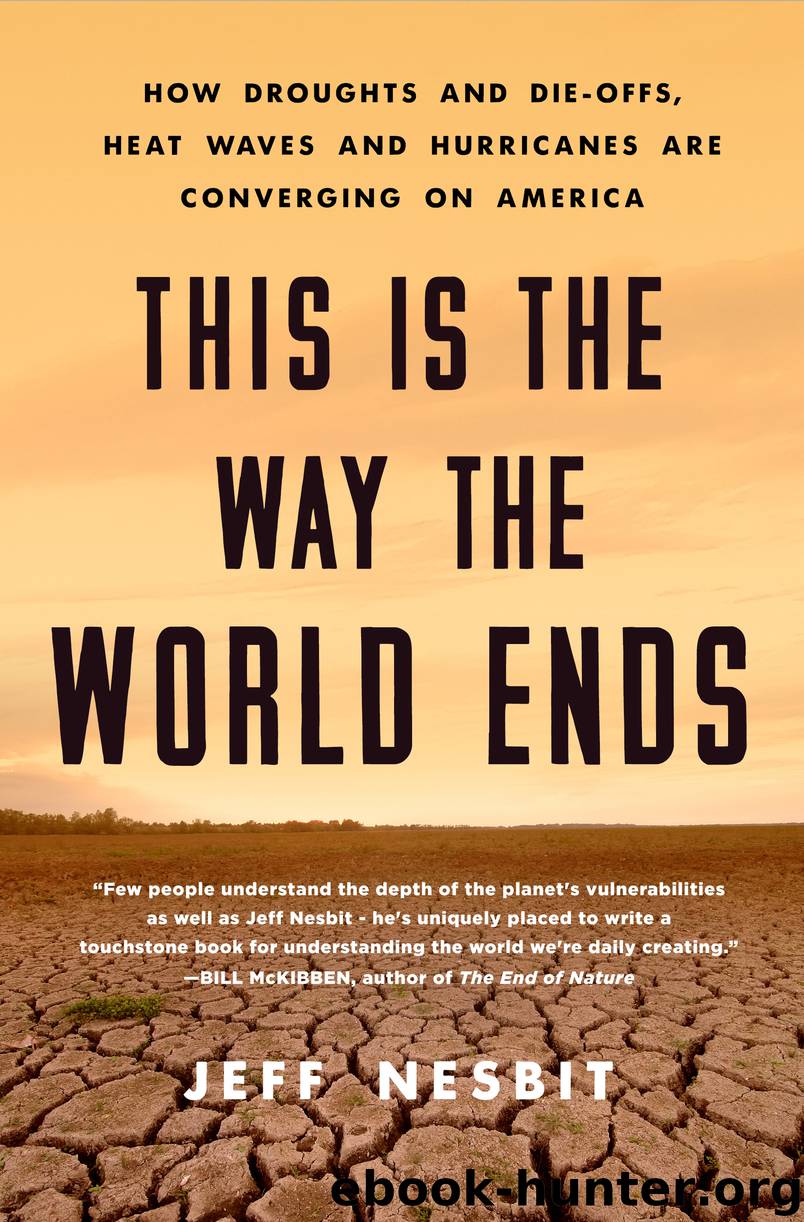
Author:Jeff Nesbit
Language: eng
Format: epub
Publisher: St. Martin's Press
18
Jordan
Hundreds of thousands of refugees are trapped between countries in camps in the dry, dusty plains of Jordan. Until, or unless, world leaders recognize an independent Palestinian state someday, these refugees inside Jordan literally have no home that they can truly call their own.
More than two million registered Palestinian refugees live in Jordan. Most of them have full citizenship—but not all. There are ten recognized Palestine camps in Jordan, which hold nearly four hundred thousand refugees without a country of their own.
Jordan hosts more Palestinian refugees than any other country in the world. It also shelters hundreds of thousands of refugees fleeing from the conflict in nearby Syria. These refugees, especially, suffer from remorseless, abject poverty. Their legal status is precarious. Health care and education are difficult propositions.1
However, these terrible problems—tenuous legal status, awful health-care delivery services, substandard schools—may be the least of their worries.
Jordan was already one of the driest countries on the planet before a decade of incredibly dry rainy seasons at the start of the twenty-first century made a bad situation considerably worse. Jordan has witnessed the “driest season in decades,” the water ministry said in a statement two years ago.
The total rainfall in Jordan in 2014 was less than a third of the country’s long-term average annual precipitation—in a country that was already incredibly arid and dry and one of the world’s most water-scarce countries. In 2014, the country’s dams held just 43 percent of their total capacity.
Even in good years, Jordan’s annual water supply is far below the recognized water “poverty line.” Its annual per capita water supply of 145 cubic meters is far below the international water poverty line of 500 cubic meters per year.2
Jordan lies squarely within the subtropical band above Earth’s equator that scientists have predicted for years would become progressively drier and subjected to prolonged drought as the climate system changes.
The rainy season that usually provides just enough rain to support crops in Jordan is now coming later and later each year. The changes are small each year, but over time, it adds up to a profound shift in just the space of a decade.
A study by Abdul Halim Abu-Hazeem, the former head of Jordan’s Meteorological Department, found that rainfall in Jordan fell overall by 8 percent from 2001 to 2010 and that the onset of the rainy season kept slipping year after year.
Crops like wheat and barley that are fed by rainfall during this season have been adversely affected, experts say. Two years ago, farmers in Jordan began to notice a growing trend where wheat was standing in fields in February each year at heights far below where they were in previous years.
The trend had become obvious to them over the course of two decades, they told government officials in a special report on Jordan’s growing agricultural sector crisis by IRIN, a nonprofit closely aligned with the humanitarian arm of the United Nations.3
Jordan’s rainy season should be under way by the end of September or early October. In 2014, the
Download
This site does not store any files on its server. We only index and link to content provided by other sites. Please contact the content providers to delete copyright contents if any and email us, we'll remove relevant links or contents immediately.
| Anthropology | Archaeology |
| Philosophy | Politics & Government |
| Social Sciences | Sociology |
| Women's Studies |
The Secret History by Donna Tartt(19291)
The Social Justice Warrior Handbook by Lisa De Pasquale(12222)
Thirteen Reasons Why by Jay Asher(8995)
This Is How You Lose Her by Junot Diaz(6955)
Weapons of Math Destruction by Cathy O'Neil(6362)
Zero to One by Peter Thiel(5863)
Beartown by Fredrik Backman(5839)
The Myth of the Strong Leader by Archie Brown(5552)
The Fire Next Time by James Baldwin(5503)
How Democracies Die by Steven Levitsky & Daniel Ziblatt(5271)
Promise Me, Dad by Joe Biden(5189)
Stone's Rules by Roger Stone(5129)
A Higher Loyalty: Truth, Lies, and Leadership by James Comey(5017)
100 Deadly Skills by Clint Emerson(4972)
Rise and Kill First by Ronen Bergman(4834)
Secrecy World by Jake Bernstein(4795)
The David Icke Guide to the Global Conspiracy (and how to end it) by David Icke(4771)
The Farm by Tom Rob Smith(4549)
The Doomsday Machine by Daniel Ellsberg(4538)
